Representative vs. Direct Democracy
Two visions of self-governance — and why the best system might be both.
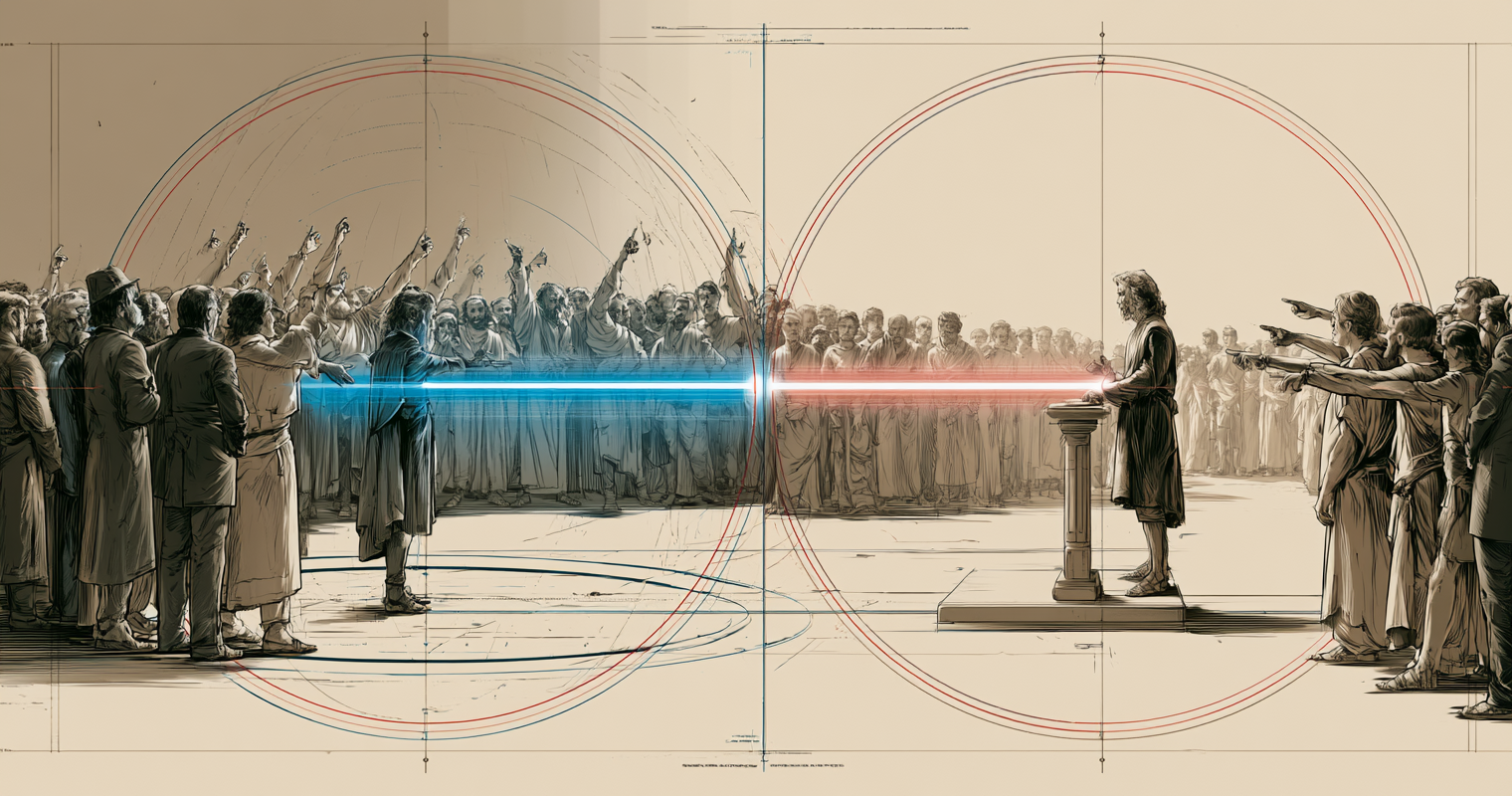
Democracy Is a Spectrum
Most people think of democracy as a binary: either the people vote on laws directly, or they elect representatives to do it for them. In reality, democracy exists on a spectrum, and most functioning democracies use elements of both.
The United States is a constitutional republic — citizens elect representatives who legislate on their behalf. But it also features direct democratic elements: ballot initiatives in 26 states, town hall meetings in New England, and jury duty, where ordinary citizens render verdicts with the force of law.
Understanding where different systems fall on this spectrum is essential for thinking about how governance can evolve. Neither pure direct democracy nor pure representation is without flaws — but understanding each helps us design something better.
The Case for Representatives
Representative democracy solves a real problem: most people can't spend their days studying legislation. The American founders understood this. They designed a system where citizens could choose capable delegates — people with the time, expertise, and judgment to study complex issues and make informed decisions.
Specialization. A senator on the Armed Services Committee develops deep expertise in defense policy. A representative on Ways and Means masters the tax code. This specialization produces better-informed legislation than if every citizen had to master every topic.
Deliberation. Legislatures provide structured forums for debate, amendment, and compromise. The committee process, whatever its flaws, forces proposed laws through multiple rounds of scrutiny before they reach a vote.
Minority Protection. Madison's great insight in Federalist No. 10 was that a large republic, with diverse representatives from diverse districts, would naturally check majority tyranny. A national legislature is less likely to pass oppressive laws than a local majority might be in a direct vote.
The Case for Direct Input
But representative democracy has a critical weakness: representatives don't always represent. A widely cited 2014 Princeton study by Gilens and Page found that "economic elites and organized groups representing business interests have substantial independent impacts on U.S. government policy, while average citizens and mass-based interest groups have little or no independent influence." This finding remains debated among political scientists — critics note that the preferences of wealthier and average citizens frequently overlap on most issues, making the causal relationship more complex than the headline suggests. But the perception of a gap between public preferences and legislative action is real and bipartisan.
Direct democracy addresses this gap. When citizens vote on issues directly, there's no intermediary to capture, no lobbyist to influence, no major donors to appease. The result reflects the actual will of the people — for better or worse.
Direct input also solves the "bundling problem." In representative elections, you vote for a candidate who holds positions on hundreds of issues. You might agree with their healthcare stance but oppose their trade policy. Direct democracy unbundles these issues, letting citizens express nuanced, issue-by-issue preferences.
The Hybrid Model: Best of Both Worlds
The most promising path forward isn't choosing between representative and direct democracy — it's combining them. This is exactly what Constitution.Vote is designed to do.
Imagine a system where elected officials still write and pass laws, but a real-time, verified public signal shows exactly what their constituents want on every major issue. Representatives could consult this signal before voting. Journalists could compare representatives' votes against their constituents' preferences. Voters could see, in concrete terms, whether their representatives actually represent them.
This is what political scientists call "monitorial democracy" — a system where citizens don't govern directly but maintain continuous, informed oversight of those who do. The people's assembly doesn't replace Congress; it watches Congress, grades it, and gives it nowhere to hide.
Liquid democracy takes this even further. On issues where you have expertise or strong opinions, you vote directly. On issues where you don't, you delegate your vote to someone you trust — and you can revoke that delegation at any time. It's representation without lock-in.
Ready to make your voice heard?
Join the people's assembly and vote on the issues that matter. Your voice, verified and counted.
Continue Reading
What Is Direct Democracy?
From the Athenian agora to the digital age — how citizens can govern themselves without intermediaries.
How It WorksThe Delegate System & Liquid Democracy
What if you could vote on the issues you care about — and delegate the rest to someone you trust?
Modern ContextThe Case for a People's Assembly
What if the people had their own congress — not to pass laws, but to make their will undeniable?